Efficient Business Waste Removal in Canary Wharf

Introduction to Business Waste Removal
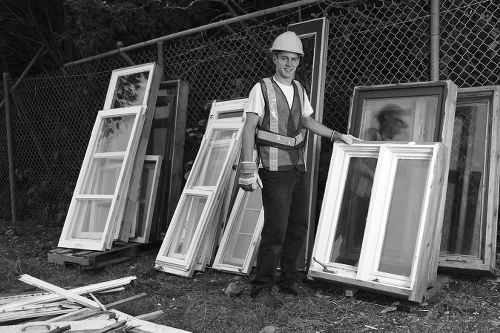
A man wearing a safety helmet and reflective vest stands outdoors next to a collection of large, white-framed double-glazed windows leaning against a chain-link fence. The windows vary in size and design, some with multiple panes, and are positioned on a patch of grass with additional window sashes and frame components scattered around on the ground. Behind the fence, there is a backdrop of trees and foliage, indicating a natural, outdoor environment typical of a waste clearance site accessible from the Canary Wharf area. The lighting appears natural, with shadows cast on the ground, and the man is smiling while pointing towards one of the window frames, suggesting a professional assessment or presentation related to rubbish removal or property clearance services. This scene exemplifies a typical setup for waste removal specialists, such as Office Clearance Canary Wharf, engaging in the disposal or recycling of building materials and fixtures, in alignment with local property renovation or disposal needs within the London postcode area.

Managing waste is a critical aspect of running a successful business in Canary Wharf. Effective waste removal not only ensures a clean and safe working environment but also contributes to sustainability and compliance with local regulations.

Businesses generate various types of waste, including office waste, construction debris, and recycling materials. Proper handling and disposal of these materials are essential to minimize environmental impact and maintain operational efficiency.

Canary Wharf, being a major financial district, demands high standards for waste management services. Companies operating here need reliable and professional waste removal solutions tailored to their specific needs.

Types of Business Waste
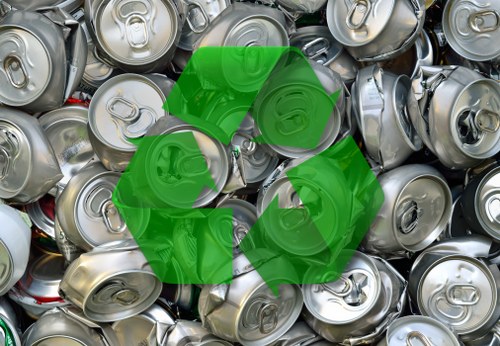
A close-up view of a large pile of crushed aluminium beverage cans, predominantly silver with some showing hints of red and green paint, with pull tabs and seams visible on many. The cans are tightly packed together, some slightly dented or flattened, creating a textured surface. In the center, a semi-transparent green recycling symbol overlay indicates eco-friendly disposal. The background consists of more aluminium cans, filling the frame and extending to the edges, suggesting an environment where recyclable waste is collected, such as a warehouse or collection point near Canary Wharf. The lighting is neutral, highlighting the reflective metallic surfaces and emphasizing the condition of the cans. This image aligns with waste management and rubbish removal services provided by Office Clearance Canary Wharf in London, representing the importance of proper recycling practices for local businesses.

Understanding the different types of business waste is crucial for effective removal and recycling. Common categories include:

  • Office Waste: Paper, cardboard, electronics, and other stationery items.
  • Industrial Waste: By-products from manufacturing processes, including hazardous materials.
  • Construction Debris: Materials from building and renovation projects such as concrete, metal, and wood.
  • Recyclable Materials: Plastics, glass, metals, and other materials that can be reprocessed.

Each type of waste requires different handling and disposal methods to ensure compliance with environmental standards and minimize landfill use.

Choosing the right waste removal service can help businesses manage their waste more efficiently and sustainably.

The Importance of Professional Waste Removal Services
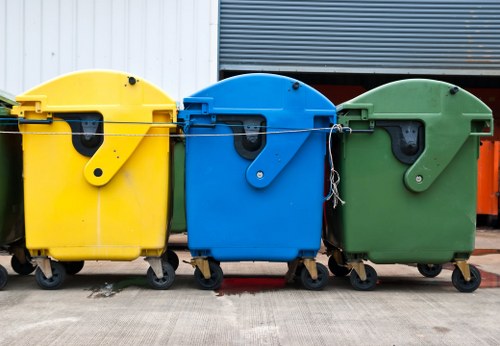
A row of three large wheeled waste bins positioned on a concrete pavement in front of a building, used for rubbish collection and disposal. The first bin on the left is bright yellow with a black handle and a textured surface, likely made of durable plastic. The middle bin is blue, featuring a similar design with a black handle and textured finish. The third bin on the right is green, matching the others in size and design, and also equipped with a black handle. The bins are aligned side by side, with a wire or chain securing the lids of the middle and green bins. Behind the bins, part of the building façade includes a metallic grey roll-up door and a white vertical panel, indicating an industrial or commercial property. The scene is set during daytime with overcast natural lighting, emphasizing the colours and textures of the bins. These waste containers are representative of rubbish collection services commonly used by businesses in London, such as those offered by Office Clearance Canary Wharf, to manage commercial waste efficiently within the Canary Wharf area postcode.

Professional waste removal services offer numerous benefits for businesses in Canary Wharf. These services ensure that waste is collected, transported, and disposed of in accordance with local regulations and environmental guidelines.

By outsourcing waste management, businesses can focus on their core operations without worrying about the complexities of waste disposal. Professional services also provide expertise in handling hazardous and recyclable materials, ensuring safe and responsible management.

Moreover, partnering with a reputable waste removal company can enhance a business’s sustainability efforts, reduce carbon footprint, and promote a positive image among clients and stakeholders.

Choosing the Right Waste Removal Partner
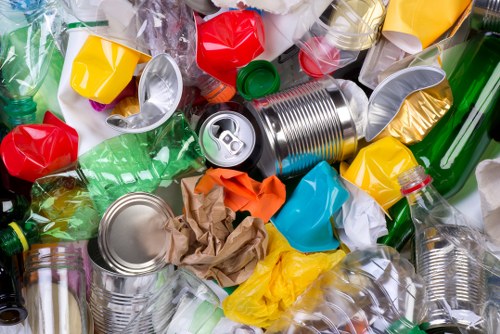
A close-up image of a mixed pile of discarded recyclable waste materials, including crumpled paper, plastic bottles, aluminum cans with pull-tabs, and various plastic containers, some with caps and some without, in different colours such as red, green, yellow, and transparent. The waste appears to be outdoors on a pavement or driveway, with some items overlapping and scattered in a haphazard manner. The surface beneath the waste is not clearly visible but suggests an urban environment, typical of rubbish clearance scenarios. This collection of waste materials exemplifies typical household or office refuse that Office Clearance Canary Wharf might handle for businesses in Canary Wharf, London, or the surrounding postcodes, emphasizing the importance of proper rubbish removal and recycling services.

Selecting the appropriate waste removal service is essential for effective waste management. Here are key factors to consider:

  1. Experience and Reputation: Look for companies with a proven track record in business waste removal in Canary Wharf.
  2. Range of Services: Ensure the provider offers comprehensive services tailored to your specific waste types and volume.
  3. Compliance: Verify that the company adheres to all local regulations and environmental standards.
  4. Sustainability Practices: Choose a provider committed to recycling and reducing landfill use.
  5. Customer Support: Reliable customer service ensures timely and efficient waste removal operations.

Taking these factors into account will help businesses select a partner that meets their waste management needs effectively.

Investing in the right waste removal service can lead to long-term benefits, including cost savings and improved operational efficiency.

Benefits of Local Waste Removal Services
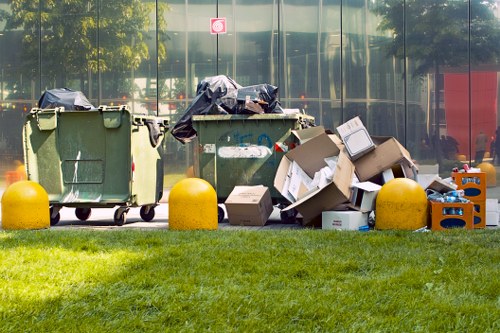
Two large green waste bins with lids partially open, positioned on a paved area adjacent to a modern glass building, surrounded by bright yellow safety barriers. The left bin is closed and appears to be made of durable plastic with a rough, textured surface, while the right bin has a plastic liner visible through the open lid, with black rubbish bags and loose cardboard boxes piled on top and around it. Several flat cardboard boxes, some crushed and others standing upright, along with miscellaneous packaging materials are arranged in a disorganized manner beside the bins. The background shows a reflective glass facade of a commercial property, with trees and a blue sky faintly mirrored in the glass. A small portion of a red structure is visible on the right, indicating an urban or business park environment. The scene appears to be an outdoor area near office premises where waste removal services, such as those offered by Office Clearance Canary Wharf, might be regularly required for disposing of business-related rubbish and packaging waste, consistent with the postcode area around Canary Wharf, London.

Opting for local waste removal services in Canary Wharf offers several advantages:

  • Quick Response Times: Local providers can offer faster waste collection and emergency services.
  • Knowledge of Local Regulations: They are well-versed in local laws and compliance requirements.
  • Community Support: Supporting local businesses contributes to the local economy and community development.
  • Environmental Responsibility: Local companies are often more invested in sustainable practices that benefit the immediate area.

These benefits make local waste removal services a preferred choice for businesses aiming for efficient and responsible waste management.

Additionally, local providers can offer personalized services that cater specifically to the unique needs of Canary Wharf businesses.

Implementing a Waste Management Plan

A man wearing a safety helmet and reflective vest stands outdoors next to a collection of large, white-framed double-glazed windows leaning against a chain-link fence. The windows vary in size and design, some with multiple panes, and are positioned on a patch of grass with additional window sashes and frame components scattered around on the ground. Behind the fence, there is a backdrop of trees and foliage, indicating a natural, outdoor environment typical of a waste clearance site accessible from the Canary Wharf area. The lighting appears natural, with shadows cast on the ground, and the man is smiling while pointing towards one of the window frames, suggesting a professional assessment or presentation related to rubbish removal or property clearance services. This scene exemplifies a typical setup for waste removal specialists, such as Office Clearance Canary Wharf, engaging in the disposal or recycling of building materials and fixtures, in alignment with local property renovation or disposal needs within the London postcode area.

Developing a comprehensive waste management plan is essential for businesses to handle waste effectively. A robust plan includes:

  • Waste Audit: Assessing the types and volumes of waste generated.
  • Reduction Strategies: Implementing measures to minimize waste production.
  • Recycling Programs: Establishing systems for sorting and recycling materials.
  • Proper Disposal: Ensuring safe and compliant disposal of non-recyclable waste.
  • Employee Training: Educating staff on waste management practices and responsibilities.

A well-structured waste management plan not only improves operational efficiency but also enhances environmental sustainability.

Regular reviews and updates to the plan ensure that it remains effective and aligned with evolving regulations and business needs.

Cost-Effective Waste Removal Solutions

A close-up view of a large pile of crushed aluminium beverage cans, predominantly silver with some showing hints of red and green paint, with pull tabs and seams visible on many. The cans are tightly packed together, some slightly dented or flattened, creating a textured surface. In the center, a semi-transparent green recycling symbol overlay indicates eco-friendly disposal. The background consists of more aluminium cans, filling the frame and extending to the edges, suggesting an environment where recyclable waste is collected, such as a warehouse or collection point near Canary Wharf. The lighting is neutral, highlighting the reflective metallic surfaces and emphasizing the condition of the cans. This image aligns with waste management and rubbish removal services provided by Office Clearance Canary Wharf in London, representing the importance of proper recycling practices for local businesses.

Effective waste removal doesn’t have to be expensive. Businesses can adopt cost-effective solutions by:

  • Optimizing Waste Segregation: Properly sorting waste reduces disposal costs and increases recycling rates.
  • Partnering with the Right Provider: Competitive pricing and tailored services can lead to significant savings.
  • Reducing Waste Generation: Implementing waste reduction strategies lowers overall waste volume.
  • Recycling and Reusing: Maximizing recyclable materials can offset disposal expenses.

By focusing on these strategies, businesses can achieve effective waste management while keeping costs under control.

Investing in sustainable practices can also lead to long-term financial benefits and enhance the company’s reputation.

Environmental Impact of Proper Waste Removal

A row of three large wheeled waste bins positioned on a concrete pavement in front of a building, used for rubbish collection and disposal. The first bin on the left is bright yellow with a black handle and a textured surface, likely made of durable plastic. The middle bin is blue, featuring a similar design with a black handle and textured finish. The third bin on the right is green, matching the others in size and design, and also equipped with a black handle. The bins are aligned side by side, with a wire or chain securing the lids of the middle and green bins. Behind the bins, part of the building façade includes a metallic grey roll-up door and a white vertical panel, indicating an industrial or commercial property. The scene is set during daytime with overcast natural lighting, emphasizing the colours and textures of the bins. These waste containers are representative of rubbish collection services commonly used by businesses in London, such as those offered by Office Clearance Canary Wharf, to manage commercial waste efficiently within the Canary Wharf area postcode.

Proper waste removal has a significant positive impact on the environment. Key benefits include:

  • Reducing Landfill Use: Efficient waste management minimizes the amount of waste sent to landfills.
  • Conserving Resources: Recycling and reusing materials preserve natural resources.
  • Lowering Carbon Footprint: Sustainable waste practices reduce greenhouse gas emissions.
  • Preventing Pollution: Proper disposal prevents contamination of soil, water, and air.

Businesses play a crucial role in environmental conservation by adopting responsible waste removal practices.

Commitment to sustainability not only benefits the planet but also enhances the company’s image and appeal to environmentally conscious clients.

Technological Advancements in Waste Removal

A close-up image of a mixed pile of discarded recyclable waste materials, including crumpled paper, plastic bottles, aluminum cans with pull-tabs, and various plastic containers, some with caps and some without, in different colours such as red, green, yellow, and transparent. The waste appears to be outdoors on a pavement or driveway, with some items overlapping and scattered in a haphazard manner. The surface beneath the waste is not clearly visible but suggests an urban environment, typical of rubbish clearance scenarios. This collection of waste materials exemplifies typical household or office refuse that Office Clearance Canary Wharf might handle for businesses in Canary Wharf, London, or the surrounding postcodes, emphasizing the importance of proper rubbish removal and recycling services.

The waste removal industry is evolving with technological advancements that improve efficiency and sustainability. Innovations include:

  • Automated Sorting Systems: Enhancing the accuracy and speed of recycling processes.
  • GPS Tracking: Optimizing waste collection routes for better efficiency.
  • Smart Bins: Monitoring waste levels and notifying services when collections are needed.
  • Data Analytics: Analyzing waste patterns to develop more effective management strategies.

These technologies enable waste removal services to offer more reliable and sustainable solutions to businesses.

Leveraging technology helps in reducing operational costs and improving overall waste management performance.

Regulatory Compliance and Waste Removal

Two large green waste bins with lids partially open, positioned on a paved area adjacent to a modern glass building, surrounded by bright yellow safety barriers. The left bin is closed and appears to be made of durable plastic with a rough, textured surface, while the right bin has a plastic liner visible through the open lid, with black rubbish bags and loose cardboard boxes piled on top and around it. Several flat cardboard boxes, some crushed and others standing upright, along with miscellaneous packaging materials are arranged in a disorganized manner beside the bins. The background shows a reflective glass facade of a commercial property, with trees and a blue sky faintly mirrored in the glass. A small portion of a red structure is visible on the right, indicating an urban or business park environment. The scene appears to be an outdoor area near office premises where waste removal services, such as those offered by Office Clearance Canary Wharf, might be regularly required for disposing of business-related rubbish and packaging waste, consistent with the postcode area around Canary Wharf, London.

Compliance with local and national regulations is a critical aspect of business waste removal in Canary Wharf. Regulations govern the handling, transportation, and disposal of various waste types to protect public health and the environment.

Businesses must stay informed about relevant laws and guidelines to ensure their waste management practices are compliant. Non-compliance can result in hefty fines and damage to the company’s reputation.

Partnering with a knowledgeable waste removal service helps businesses navigate complex regulatory requirements with ease.

Regular audits and updates to waste management practices ensure ongoing compliance and sustainability.

Sustainability Initiatives in Waste Removal

A man wearing a safety helmet and reflective vest stands outdoors next to a collection of large, white-framed double-glazed windows leaning against a chain-link fence. The windows vary in size and design, some with multiple panes, and are positioned on a patch of grass with additional window sashes and frame components scattered around on the ground. Behind the fence, there is a backdrop of trees and foliage, indicating a natural, outdoor environment typical of a waste clearance site accessible from the Canary Wharf area. The lighting appears natural, with shadows cast on the ground, and the man is smiling while pointing towards one of the window frames, suggesting a professional assessment or presentation related to rubbish removal or property clearance services. This scene exemplifies a typical setup for waste removal specialists, such as Office Clearance Canary Wharf, engaging in the disposal or recycling of building materials and fixtures, in alignment with local property renovation or disposal needs within the London postcode area.

Sustainability is at the forefront of modern waste removal strategies. Businesses in Canary Wharf are increasingly adopting green practices to reduce their environmental footprint. Key initiatives include:

  • Recycling Programs: Enhancing the separation and processing of recyclable materials.
  • Waste-to-Energy: Converting non-recyclable waste into usable energy.
  • Composting: Transforming organic waste into valuable compost for agricultural use.
  • Zero Waste Goals: Striving to eliminate waste through comprehensive reduction and reuse strategies.

Implementing these initiatives not only supports environmental goals but also aligns with corporate social responsibility objectives.

Businesses benefit from improved sustainability credentials, attracting environmentally conscious customers and partners.

Future Trends in Business Waste Removal

A close-up view of a large pile of crushed aluminium beverage cans, predominantly silver with some showing hints of red and green paint, with pull tabs and seams visible on many. The cans are tightly packed together, some slightly dented or flattened, creating a textured surface. In the center, a semi-transparent green recycling symbol overlay indicates eco-friendly disposal. The background consists of more aluminium cans, filling the frame and extending to the edges, suggesting an environment where recyclable waste is collected, such as a warehouse or collection point near Canary Wharf. The lighting is neutral, highlighting the reflective metallic surfaces and emphasizing the condition of the cans. This image aligns with waste management and rubbish removal services provided by Office Clearance Canary Wharf in London, representing the importance of proper recycling practices for local businesses.

The future of business waste removal in Canary Wharf is shaped by trends aimed at enhancing efficiency and sustainability. Emerging trends include:

  • Circular Economy: Emphasizing the reuse and recycling of materials to create a closed-loop system.
  • Advanced Recycling Technologies: Developing new methods for processing and repurposing waste.
  • Digital Waste Management: Utilizing digital tools for better tracking and management of waste streams.
  • Green Certifications: Achieving certifications for sustainable waste management practices.

Staying ahead of these trends helps businesses maintain effective waste removal systems and contribute to a sustainable future.

Adapting to these changes ensures that waste management practices remain efficient, compliant, and environmentally responsible.

Conclusion

A row of three large wheeled waste bins positioned on a concrete pavement in front of a building, used for rubbish collection and disposal. The first bin on the left is bright yellow with a black handle and a textured surface, likely made of durable plastic. The middle bin is blue, featuring a similar design with a black handle and textured finish. The third bin on the right is green, matching the others in size and design, and also equipped with a black handle. The bins are aligned side by side, with a wire or chain securing the lids of the middle and green bins. Behind the bins, part of the building façade includes a metallic grey roll-up door and a white vertical panel, indicating an industrial or commercial property. The scene is set during daytime with overcast natural lighting, emphasizing the colours and textures of the bins. These waste containers are representative of rubbish collection services commonly used by businesses in London, such as those offered by Office Clearance Canary Wharf, to manage commercial waste efficiently within the Canary Wharf area postcode.

Effective business waste removal in Canary Wharf is essential for maintaining a clean, safe, and sustainable working environment. By understanding the types of waste, choosing the right removal partner, and implementing robust waste management plans, businesses can achieve both operational efficiency and environmental responsibility.

Embracing sustainable practices and leveraging technological advancements will further enhance waste management efforts, ensuring long-term benefits for businesses and the community.

Contact us today to learn how our professional waste removal services can support your business in Canary Wharf.

Office Clearance Canary Wharf

Discover efficient and sustainable business waste removal solutions in Canary Wharf. Learn about types, benefits, and choosing the right services for your business.

Book Your Office Clearance Now

Get In Touch With Us.

Please fill out the form below to send us an email and we will get back to you as soon as possible.